NASA’s adorable underwater rover might be the first to discover alien life0
- From Around the Web, Space
- November 22, 2019
NASA is about to put a rover to the test in Antarctica, and it’s unlike any robot the agency has ever shot into space.

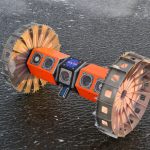
NASA is about to put a rover to the test in Antarctica, and it’s unlike any robot the agency has ever shot into space.

Meteorologists give names to large storms with wide impacts — like tropical cyclones and, in some cases, massive winter storms — to help make communication easier. If you have several active tropical storms, for instance, you want to be sure everyone knows which one you’re discussing.
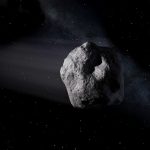
It is a well-known astronomical convention that Earth has only one natural satellite, which is known (somewhat uncreatively) as “the Moon”. However, astronomers have known for a little over a decade that Earth also has a population of what are known as “transient Moons”. These are a subset of Near-Earth Objects (NEOs) that are temporarily scooped up by Earth’s gravity and assume orbits around our planet.
The fifth force could also potentially help researchers explain and spot black matter, which is theorized to account for 85 per cent of the universe

Data from ESA’s Cluster mission has provided a recording of the eerie “song” that Earth sings when it is hit by a solar storm.
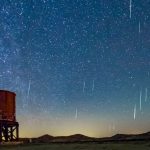
The night sky could light up with hundreds of shooting stars for an hour on Thursday thanks to a spectacular celestial event.
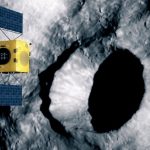
A group of planetary defense advocates is asking European governments to fund a mission to a near Earth asteroid, three years after a similar mission failed to win approval.

Two infants were buried some 2,100 years ago wearing “helmets” made from the skulls of other children, archaeologists have discovered.

Memory researchers document a ‘postdictive’ bias in deja vu experiencers in the lab, and offer an explanation
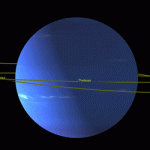
Bobbing up and down like a carousel horse might not sound like a stable way to orbit a planet, but it works for one little moon of Neptune. The planet’s innermost known satellite, Naiad, has a tilted orbit and it moves up-and-down relative to its neighboring moon, Thalassa.