Robotic stingray powered by light-activated muscle cells0
- From Around the Web, Science & Technology
- July 13, 2016
Part machine and part living cells, this artificial stingray can be maneuvered through obstacle courses.

Part machine and part living cells, this artificial stingray can be maneuvered through obstacle courses.

A drone hobbyist manages to capture the incredible sight of a young shark being chased by killer whales.
“To uncover the nature of dark energy and the origin of our 14 billion year old accelerating universe, we have to compare the results from big studies to computational models of the universe,”

After its much heralded re-start last year, has the world’s biggest machine, the Large Hadron Collider, found a new particle?
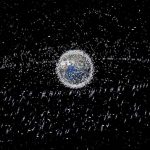
RemoveDebris operation will test a range of devices, including nets and harpoons, designed to sweep up litter orbiting Earth

Stem cell-stimulating fillings could change dentistry and save your teeth
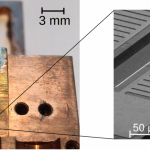
In the past decade, researchers have attempted to miniaturize photonic technologies for dense integration onto tiny semiconductor chips. To that end there is intense activity in developing even smaller nanolasers, of which plasmonic lasers are the tiniest.

Bioluminescence, the peculiar ability of some organisms to behave like living night-lights, could be the key to some remarkable advances

“Another example is the array of technologies—often referred to collectively as geoengineering—that potentially could help reverse the warming effects of global climate change.”

Early life forms on Earth are likely to have mutated and evolved at much higher rates than they do today, suggests a new analysis from researchers at the University of North Carolina.